
Composable CDPs vs. All-in-One Suites: Choosing the Right Data Architecture
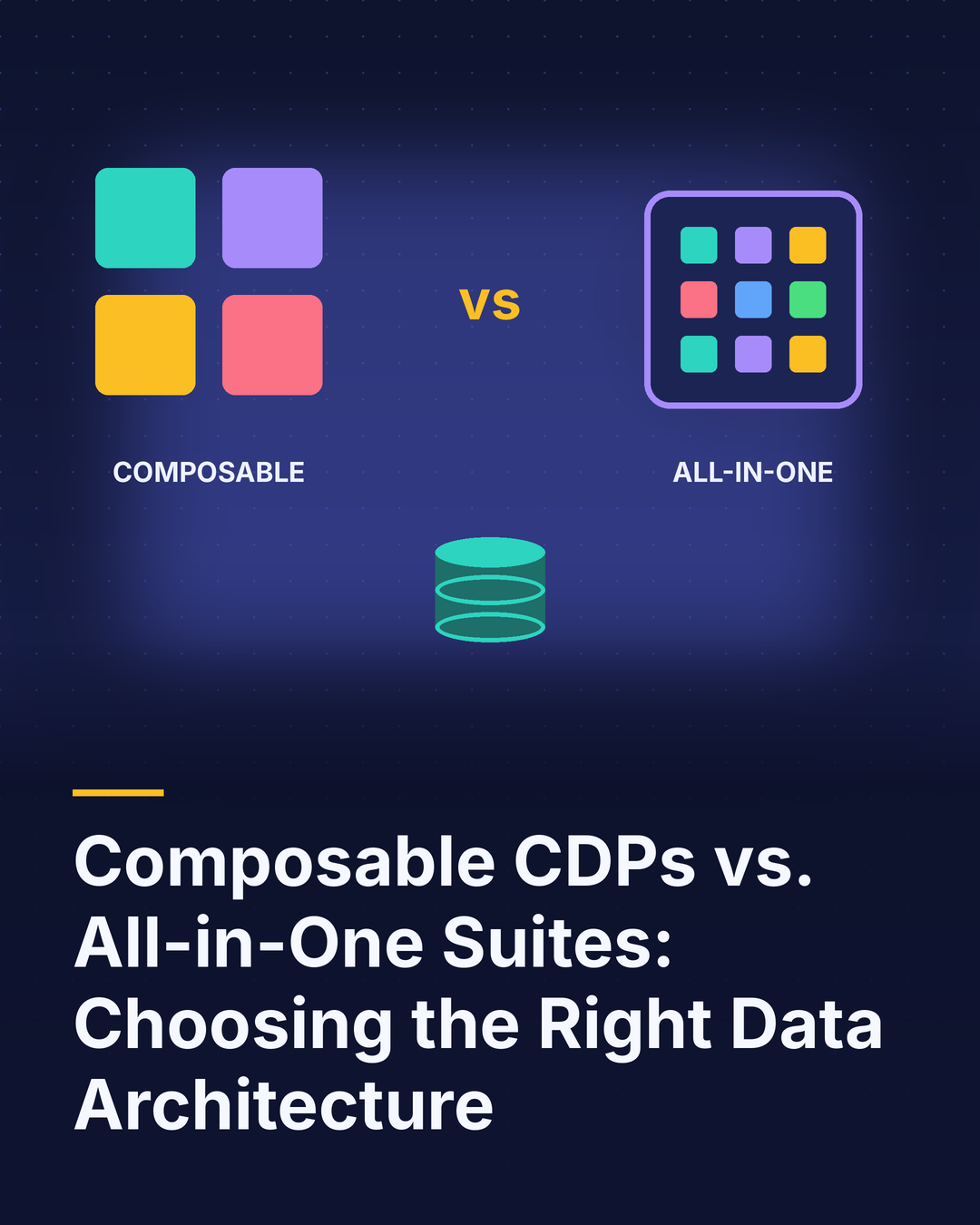
Customer data platforms promised to give marketers a single, unified view of every customer. That promise still holds, but the way companies deliver on it has split into two distinct approaches. On one side are all-in-one suites, packaged platforms that collect, unify, segment and activate customer data in one product. On the other side is the composable approach, which builds CDP capabilities directly on top of a company’s existing cloud data warehouse.
Both can work beautifully. The right choice depends on your team, your data maturity and where you want to go.
The All-in-One Suite
Packaged CDPs bundle everything together: data collection, identity resolution, profile building, audience segmentation and activation to marketing channels. Their biggest strength is speed and simplicity.
- Faster time to value, since much of the setup is prebuilt
- Marketer-friendly interfaces that don’t require deep technical skills
- One vendor relationship for support and accountability
The tradeoffs? Data typically gets copied into the vendor’s platform, which can create duplication with your warehouse. Customization may be limited, and costs can rise as data volumes grow.
The Composable Approach
Composable CDPs treat the cloud data warehouse as the single source of truth. Instead of copying data elsewhere, teams use specialized tools that sit on top of the warehouse for identity resolution, modeling and activation, often called reverse ETL.
- No duplicate data copies, which simplifies governance and security
- Flexibility to choose best-fit tools and adapt as needs change
- Access to all company data, not just marketing data, for richer segmentation and AI modeling
The tradeoffs here run the other direction. Composable setups usually require stronger data engineering support, more coordination across tools and a mature, well-maintained warehouse.
How to Decide
A few questions can point you toward the right fit:
- Does your company already have a well-governed cloud data warehouse? If so, composable may be a natural extension.
- How much data engineering support does marketing have? Limited support favors packaged suites.
- How quickly do you need results? Suites often launch faster.
- How important is flexibility for future AI and analytics use cases? Composable architectures tend to offer more room to grow.
It’s also worth noting the line between the two is blurring. Many packaged CDPs now offer warehouse-native options, and hybrid approaches are increasingly common.
The Bottom Line
There’s no universal winner in the composable versus all-in-one debate. All-in-one suites offer speed and simplicity, while composable architectures provide flexibility, governance advantages and a stronger foundation for AI. The best choice depends on your data maturity, technical resources and long-term goals. Whichever path you take, the real win is a unified, trusted view of the customer that helps marketing deliver experiences people genuinely appreciate.